
Skip to content
Call (325) 728-4111

Abilene, Texas · Taylor County

Post-Tension Slab Abilene TX - Engineered Foundations

A post-tension slab is a foundation held together by steel cables that are pulled tight after the concrete cures. The cables squeeze the slab into one stiff plate, so when the clay underneath swells in one corner and shrinks in another, the slab rides it as a unit instead of cracking apart. On much of Taylor County's ground, that's the reason builders choose it. Abilene Concrete Builders places, pours and stresses post-tension foundations for new homes and additions, always to an engineer's design.

  • Site visit before every estimate
  • Estimates broken out item by item
  • Residential, shop and commercial concrete
  • City approach permits and inspections handled
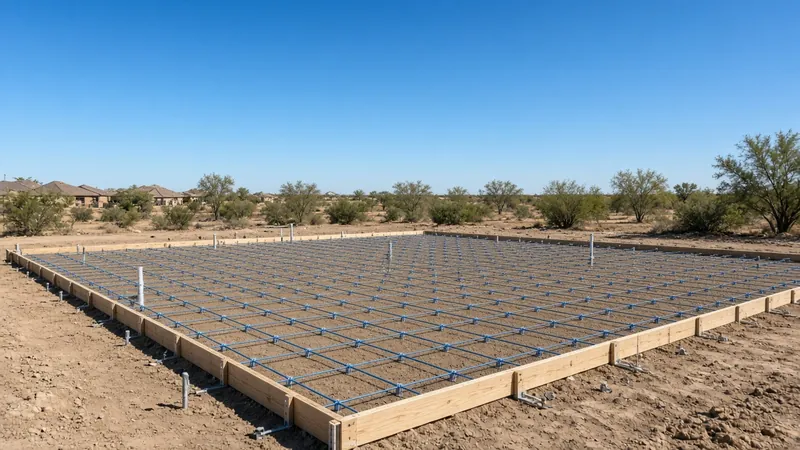
Post-tension cables on chairs across a house slab inside the forms before the pour, Abilene, TX

Request a Quote

Call anytime: (325) 728-4111

Why Abilene Ground Calls for It

Excavation wall showing dark clay soil over pale caliche on a house lot, Abilene, TX

Tobosa and Other High-Shrink Clays

USDA soil data for Taylor County lists Tobosa clay with a linear extensibility as high as 17 percent, a lab measure of how much a soil shrinks and swells with moisture. Rowena, Tillman and Vernon soils reach 7.5. The USDA's official description of the Tobosa series reads like a warning to foundation builders: 40 to 60 percent clay, with cracks up to an inch wide that can run from the surface down 20 to 60 inches, open for at least 210 days in a normal year.

Stair-step brick crack and a dropped slab edge where dry clay pulled away from a house, Abilene, TX

What That Does to a Slab

Picture the slab as a tabletop and the clay as a floor that rises and sinks in patches. A thin, loosely tied top cracks where the floor moves. A post-tensioned slab is closer to a single stiff board: it spans the soft spots and sits on the high ones without breaking.

Who Designs It

A Texas-Licensed Engineer

Abilene's building code amendments require construction documents prepared by a registered design professional under the Texas Engineering Practice Act or the state's architect licensing law. Post-tension foundation design is engineering work, and we build only to sealed plans. You can check any Texas professional engineer's license status on the Texas Board of Professional Engineers and Land Surveyors' public PE roster search.

The Industry Design Standard

The Post-Tensioning Institute publishes DC10.5, its standard for designing shallow post-tensioned foundations on expansive and stable soils. Your engineer chooses the method. Our job is to build exactly what's drawn.

The Soils Report

A design is only as good as the soil numbers behind it, and engineers often base them on a geotechnical report for the lot. If you don't have one yet, ask your engineer what they need.

How We Build a Post-Tension Foundation

Grade Beams, Vapor Retarder and Sleeves

We excavate the grade beams to the drawing, place the vapor retarder, set the plumbing sleeves and chair the beam steel. Tendon layout follows the engineer's spacing in both directions.

Pour and Stress

The slab is placed in one continuous pour. Once the concrete reaches the strength the engineer specifies, we stress each tendon to the specified force and record the elongation, then cut and cap the tendon tails. Those stressing records go to the engineer.

Floor Height and Drainage

Abilene's amendments set the finished floor of a structure outside the floodplain 18 inches above the highest point of the street gutter, measured perpendicular to the building. We confirm that height before the forms go up, and when the house is done, our concrete driveway page covers the drive.

Get a Post-Tension Foundation Quote in Abilene

Send the engineer's foundation plan and the lot address. Call (325) 728-4111 anytime, or use the quote form and choose "Post-Tension Slab."

Prefer to talk? Call (325) 728-4111 anytime.

See every service we offer at Abilene Concrete Builders.

Call (325) 728-4111Request a Quote